
The Women Pay. The Men Are Protected.
There is a particular kind of quiet fury that comes from watching the same story play out over and over again. The cast changes, the headlines shift, but the ending never does. A woman breaks a rule and her life is publicly dismantled. A powerful man breaks the law and the system adjusts itself to keep him intact. We are told this is justice. It isn’t. It’s choreography.
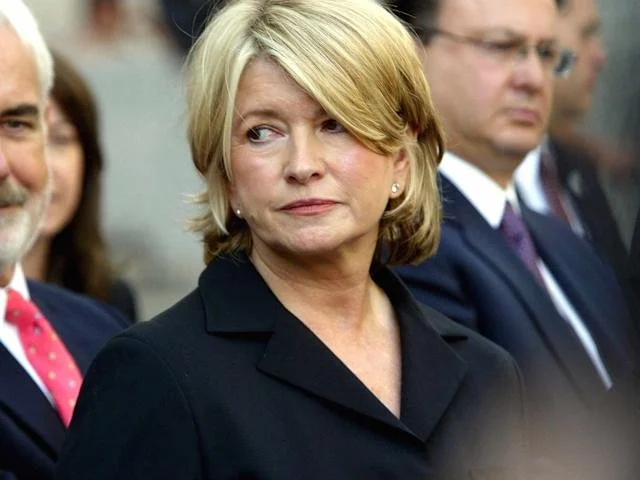
Consider Martha Stewart. She did not go to prison for insider trading. That charge never held. She went to prison for lying to federal investigators about a stock sale involving roughly $45,000. There were no victims in the traditional sense, no pension funds wiped out, no families displaced. And yet the punishment was swift, highly visible, and undeniably humiliating. The orange jumpsuit, the mugshot, the spectacle of her fall from grace were not incidental. They were the point.
Martha Stewart was not just a defendant. She was a symbol. She was a woman who built an empire, who operated at the highest levels of business without softening herself or apologizing for her success. Her prosecution did not simply communicate that lying to federal investigators has consequences. It sent a broader, more chilling message: no woman, no matter how successful, is beyond reach. The system needed that message to land.
Now contrast that with how we treat powerful men. Donald Trump was criminally convicted of 34 felony counts related to falsifying business records. In a separate case, a jury found him civilly liable for sexual abuse and defamation, awarding significant damages. And yet, there has been no comparable public dismantling of his status or power. There has been no exile, no institutional rejection, no collapse of support. The system did not recoil from him. It absorbed him.
This is the difference that is often left unspoken. When women break rules, the system performs morality. It puts on a show to reinforce that the rules matter. When powerful men break laws, the system prioritizes continuity. It bends, it absorbs, it preserves. Justice, in this context, is not blind. It is strategic.
The most uncomfortable example of this pattern may be Ghislaine Maxwell. She is the only person currently serving a significant federal prison sentence connected to Jeffrey Epstein’s sex trafficking operation. Not the men who funded the lifestyle. Not the men who participated. Not the men who facilitated access, hosted gatherings, or benefited quietly. Only her.
This is not an argument about her innocence. It is an observation about containment. Her conviction provided a focal point for public outrage. It allowed institutions to say that justice had been served, that accountability had occurred. In reality, it narrowed the scope of inquiry. It closed the narrative before the full extent of responsibility was explored. She became the endpoint, the place where the system could stop asking questions.
Once she was imprisoned, the pressure eased. Not because the truth had been fully uncovered, but because the appearance of order had been restored.
This is the pattern that becomes difficult to ignore once you see it clearly. Women are punished in ways that are visible and symbolic, reinforcing the idea that the rules are real and will be enforced. Men, particularly powerful men, are handled in ways that preserve existing structures. Their cases become complicated, their consequences delayed or diluted.
The message this sends is not subtle. The rules exist, but they are not applied evenly. For women, punishment is often immediate and defining. For powerful men, consequences are often negotiable.
You can see this dynamic far beyond high-profile criminal cases. In corporate environments, women are often removed swiftly for relatively minor missteps, while male executives are managed, repositioned, or quietly protected. In politics, female ambition is scrutinized and framed as threatening, while male misconduct is normalized as part of the landscape. In courtrooms, women are expected to meet an unspoken standard of perfection, while men are permitted to remain ongoing risks.
This is not about political affiliation. It is about power and the instinct to preserve it. A system that consistently and fully held powerful men accountable would destabilize itself. And so, instead, it makes selective examples. It punishes in ways that are visible enough to maintain credibility, while protecting the structures that keep power intact.
But justice that exists primarily to protect power is not justice. It is maintenance.
And once you recognize the pattern, it becomes impossible to dismiss it as coincidence. The real question is no longer whether women are punished more harshly. The question is why we continue to accept a system that treats that imbalance as if it were accidental.
Cases Widely Criticized for Lenient Outcomes or Lack of Accountability
Brock Turner
Sexually assaulted an unconscious woman behind a dumpster; sentenced to 6 months, served 3.Ethan Couch
Drove drunk, killed 4 people, and injured others; received probation instead of prison.Robert H. Richards IV
Convicted of sexually assaulting his minor daughter; received no prison time.Jeffrey Epstein
Ran a sex trafficking operation involving underage girls; served 13 months with work release.Kyle Rittenhouse
Shot and killed two people during protests; acquitted on self-defense grounds, sparking national debate.Candon Dahle
Admitted to repeated sexual abuse of a young child over an extended period; received probation instead of prison, drawing widespread outrage.